Tag: ubud

  • Bali Cycling Tour Through Villages: A Complete Journey Into Local Life

    Bali Cycling Tour Through Villages: A Complete Journey Into Local Life

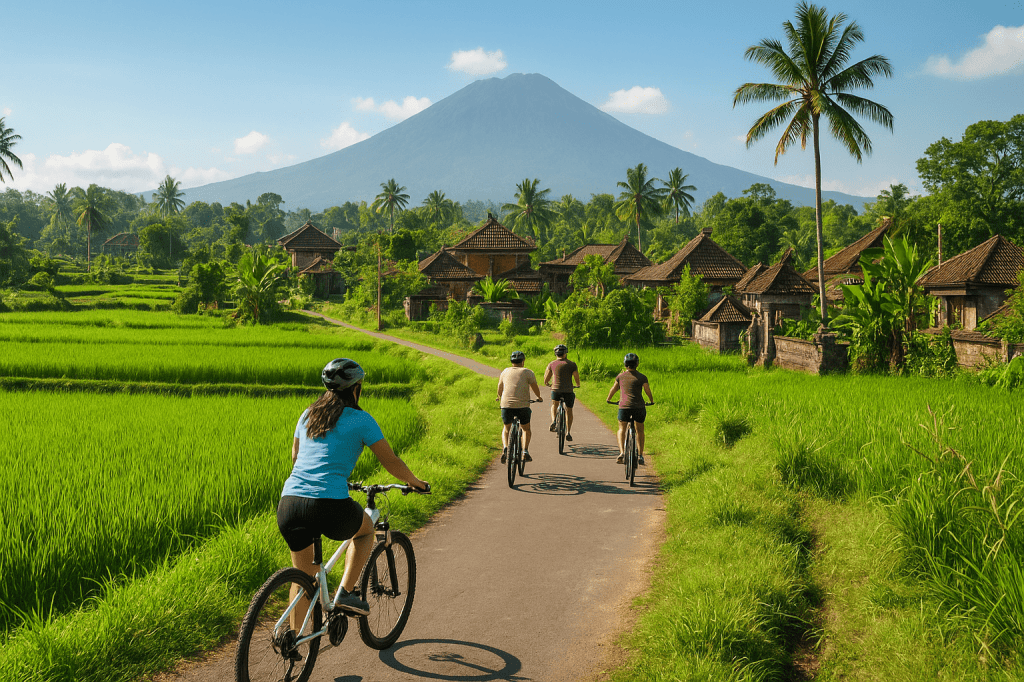
    When I first signed up for a Bali cycling tour through villages, I thought it would be just a bit of exercise and some nice views of rice paddies. Turns out, it was so much more—it became one of those experiences that sticks with you long after the trip is over. This kind of tour isn’t just about pedaling a bike; it’s about meeting real Balinese families, cruising past centuries-old temples, learning about rice farming the way locals actually do it, and getting an authentic taste of island life that no luxury resort can replicate.

    It’s funny because most people only know Bali for its beaches, infinity pools, and yoga retreats, but once you get on a bike and ride through its villages, the island shows you a whole new side. And trust me, it’s the side that makes you fall in love with the culture, not just the scenery.

    Why Choose a Bali Cycling Tour Through Villages Instead of Just Sightseeing?

    Okay, let’s be real for a second. You can sit in a van with air conditioning, snap pictures through the window, and check off the “cultural tour” box. But when you’re on two wheels? Everything changes. You feel the warm breeze, smell the incense from temple offerings, and hear roosters crowing in the background while kids wave at you like you’re some kind of celebrity.

    Cycling through Bali’s villages is slower-paced, so you actually have time to see things properly. You notice little shrines in front of homes, women carrying baskets of fruit on their heads, and farmers knee-deep in the rice paddies doing backbreaking work that’s been part of Bali’s heartbeat for centuries.

    Plus, you’re not stuck in traffic. And believe me, if you’ve ever been on a Bali road trip during peak hours, you know what a blessing that is.

    Another perk? The tours usually come with guides who grew up in those same villages. That means they don’t just point out “this is a temple” but instead tell you how their family actually worships there, or share childhood stories about swimming in the river you’re pedaling past. That kind of connection doesn’t happen when you’re just hopping between tourist attractions.

    The Start of the Journey – Mountain Drop-Off

    Most tours kick off in the cooler mountain areas, often near Kintamani, where you get insane views of Mount Batur. Starting high up means most of the ride is downhill, which, let’s be honest, is the best kind of cycling. You barely break a sweat, but you still look athletic in the photos (win-win).

    You usually get a basic mountain bike, helmet, and a bottle of water before you’re off. Don’t worry about the gear—tour operators keep it simple. The bikes aren’t Tour de France quality, but they’re comfortable enough for cruising through uneven village paths.

    Cruising Through Rice Terraces

    Here’s where things get jaw-dropping. Cycling past Tegallalang or Jatiluwih rice terraces feels like pedaling through a postcard. The green fields look unreal, and depending on the season, you’ll either see tiny seedlings being planted or golden stalks ready for harvest.

    According to the Food and Agriculture Organization (FAO), Bali’s subak system—its traditional irrigation network—has been recognized as a UNESCO cultural heritage because it reflects not just farming techniques but also deep spiritual and community values. Seeing it up close while on a bike makes you appreciate that this isn’t just scenery; it’s a living, working system tied to religion and daily survival.

    Village Life Encounters

    This is the highlight for most people. On my ride, we stopped at a small family compound where the grandmother was weaving baskets from palm leaves while her grandson chased a kite. The guide explained how each family compound is structured around a temple, and suddenly you realize every home is its own spiritual hub.

    Don’t be surprised if you’re offered coffee or fresh fruit during these visits. Balinese hospitality is next level, and it’s often included as part of the tour experience. And yes, the coffee is strong—good luck sleeping later if you drink it after 3 PM.

    Hidden Temples and Local Ceremonies

    You might pass ceremonies in progress, with villagers dressed in sarongs and headscarves, carrying offerings of flowers and rice. It feels almost intrusive to watch, but guides usually reassure you that it’s okay to observe respectfully. Sometimes, if you’re lucky, you’re even invited to join in a small blessing ritual.

    And even if you don’t stumble upon a ceremony, the temples themselves are stunning. Unlike the big touristy temples like Tanah Lot, the village shrines are smaller, quieter, and much more personal.

    Lunch With a View

    Most tours end with lunch, often overlooking rice terraces or in a garden café. It’s usually a spread of nasi goreng, satay, fresh fruit, and coconut water. After a few hours of pedaling (or mostly coasting downhill), trust me, that meal tastes better than anything you’ll eat at a 5-star resort.

    Practical Things to Know Before Booking a Bali Cycling Tour Through Villages

    How Long Does It Take?

    Expect the tour to last about 3–5 hours, including stops. The actual cycling distance is usually between 15–25 kilometers, but since it’s mostly downhill, it feels easy. Even if you’re not in great shape, you’ll be fine.

    How Much Does It Cost?

    Prices vary depending on the operator and inclusions, but generally, you’re looking at around $30–$50 USD per person. Some premium tours go higher if they include hotel pick-up, extra meals, or smaller private groups.

    When you compare that to other excursions in Bali—like a day trip to Nusa Penida or a white-water rafting adventure—it’s actually one of the most affordable activities for the amount of cultural immersion you get.

    Who Can Join?

    Most tours welcome kids, though you’ll want to check minimum age requirements. Families often rave about this activity because it gives kids something more interactive than just temple-hopping. Seniors can join too, as long as they’re comfortable on a bike. I rode with a couple in their late 60s who kept up just fine.

    What to Bring With You

    Pack light but smart:

    • Sunscreen (the tropical sun doesn’t play around).
    • A light rain jacket if you’re going in the wet season.
    • Comfortable sneakers (flip-flops are a bad idea on pedals).
    • A little cash for snacks or tips.

    Some operators provide ponchos and extra water, but better safe than sorry.

    Benefits Beyond the Bike Ride

    Here’s the thing most people don’t realize until afterward: a cycling tour through villages gives you stories you’ll actually want to tell when you get home. Everyone’s seen the famous Bali beach sunsets on Instagram, but not everyone has shared a laugh with a farmer while his cow blocks the road, or joined kids in shouting “hello mister!” as you pass their school.

    There’s also the sustainability angle. You’re supporting local businesses, small tour operators, and families who host you along the way. Compared to ATV rides or big tour buses, this leaves a lighter footprint and channels money directly into the communities you’re visiting.

    And honestly? It feels good to leave Bali knowing you connected with its people, not just its tourist attractions.

    Is It Worth It? Comparing Bali Cycling Tours to Other Popular Activities

    This is where most travelers hesitate—they want to do “the big stuff”: surfing in Canggu, hiking Mount Batur, snorkeling in Amed. And don’t get me wrong, those are awesome. But when you compare them, the cycling tour has something unique.

    Surfing gives you adrenaline, sure. Hiking Mount Batur at sunrise gives you bragging rights. But cycling through villages gives you connection. It’s slower, calmer, and honestly more meaningful. It’s also less crowded—no hundreds of people jostling for the same Instagram photo.

    For travelers who want to balance out their Bali itinerary with both adventure and culture, this is the sweet spot.

    Booking Your Bali Cycling Tour Through Villages

    The beauty of a Bali cycling tour through villages is that it’s not a one-size-fits-all deal. You can find versions that are super family-friendly, or others that focus more on photography stops, or even private tours if you want something more intimate.

    My advice? Go for one led by locals, not just generic big companies. Ask if the guides grew up in the villages you’ll be visiting. That personal connection makes a huge difference in the stories you’ll hear.

    And one last thing—don’t stress about whether you’re fit enough. These rides are designed for everyday travelers, not professional cyclists. If you can ride a bike around your neighborhood, you’ll do just fine in Bali.

    What Makes a Bali Cycling Tour Through Villages Different From Just Renting a Bike

    You might be thinking, “Why not just rent a bike and go exploring myself?” Fair question—I had the same thought once. The truth is, you can rent a bike in Bali, and in the touristy areas like Ubud, you’ll see plenty of travelers pedaling around on their own. But a Bali cycling tour through villages isn’t just about getting from point A to point B. It’s curated in a way that ensures you don’t just ride aimlessly, but actually experience things that matter.

    For starters, navigation in rural Bali isn’t always straightforward. Villages are a web of narrow lanes, dirt paths, and rice paddy tracks that often don’t show up properly on Google Maps. I’ve personally gotten lost trying to explore on my own—and while that can sometimes be fun, it also means you miss the really interesting stuff. A guided cycling tour takes you through routes that balance beauty, safety, and cultural stops.

    Then there’s the insider access. I remember one guide taking us to his cousin’s family compound, where we learned how they make canang sari, those little daily flower offerings you see everywhere in Bali. There’s no way I would’ve stumbled into that on my own. Without a local connection, you’d probably just ride past, not realizing you’re missing the chance to peek into an everyday tradition.

    And safety’s another factor. Traffic in Bali can be unpredictable—even in villages, scooters zip by, and dogs sometimes chase bikes. Having guides who know the safest, least hectic routes makes the whole experience more relaxed.

    Seasonal Considerations for a Bali Cycling Tour Through Villages

    Bali doesn’t have spring, summer, fall, winter—it has dry season and rainy season. And the difference between them can really change your cycling experience.

    If you’re planning between April and October, you’re in luck. That’s dry season, and the weather is warm but manageable. The rice terraces are usually at their greenest in the middle months (around June and July), which makes for the most photogenic rides.

    From November to March, you’re in wet season. Now, don’t get me wrong, you can still do the tours—many operators run them year-round—but expect some showers. Sometimes it’s a quick downpour that clears in 20 minutes, sometimes it sticks around for hours. Personally, I loved doing a ride in January when the rain cooled everything down, but you need a good rain jacket and some tolerance for mud.

    One bonus of riding in the rainy season? Fewer tourists. You’ll often have quieter roads and a more private feel to the whole thing.

    Read also: Budget-Friendly Bali Vacation Deals in Ubud

    Choosing the Right Bali Cycling Tour Through Villages

    With dozens of companies offering these tours, picking one can feel like scrolling through endless Netflix options—you just want someone to tell you which one’s good. While I can’t name-drop specific brands here, I can tell you what to look for:

    • Local guides, not just expats. A tour run by Balinese people gives you the most authentic stories and interactions.
    • Group size. Smaller groups (6–10 people) are way better than being herded in a pack of 30.
    • Reviews mentioning cultural stops. The best tours weave in temple visits, family compound stops, and chances to interact with locals.
    • Clear inclusions. Check if lunch, transport, and insurance are included.

    It’s worth spending an extra $10–$15 for a quality tour because those little touches—like having a knowledgeable guide or stopping for fresh coconut water in a tiny warung—make all the difference.

    Why Families and Solo Travelers Love These Tours

    If you’re traveling with kids, a cycling tour can be a lifesaver. Kids get restless with long car rides, but on a bike, they’re entertained and engaged. Many tours even offer tandem bikes or child seats. And the guides are usually fantastic with kids—teaching them a few Balinese words, pointing out farm animals, or letting them try fresh sugarcane juice.

    For solo travelers, it’s a built-in way to meet people. I joined a ride once where our group ended up going for beers in Ubud after the tour because we all clicked. It’s easier to bond over shared experiences, and cycling through rice fields together gives you that common ground.


  • Budget-Friendly Bali Vacation Deals in Ubud

    Budget-Friendly Bali Vacation Deals in Ubud

    Budget-Friendly Bali Vacation Deals in Ubud – Bali’s got a reputation, right? Exotic, lush, ridiculously Instagrammable—and, depending on who you ask, expensive. But here’s the thing: you don’t need deep pockets to have an unforgettable trip. If you play your cards right, you can experience the best of Ubud without torching your savings. Budget-friendly Bali vacation deals in Ubud aren’t some mythical unicorn—they exist, and I’ve figured out how to find them without sacrificing the stuff that makes Bali feel like paradise.

    Finding Cheap Flights to Bali Without Losing Your Mind

    Before you even set foot in Ubud, you gotta get there. And let’s be real—flights to Bali can be a budget killer. But if you know where to look, you can cut that cost way down.

    • Be flexible with dates. Flights to Bali can swing hundreds of dollars depending on the season. Avoid July–August and Christmas–New Year unless you like crowds and overpriced everything.
    • Use incognito mode. Airlines track your searches. If you keep looking at the same flights, prices can creep up. Clear your cookies or search in private mode.
    • Check budget airlines. AirAsia, Scoot, and Malindo Air often have crazy good deals if you don’t mind layovers. I once snagged a ticket from Singapore to Bali for under $50.
    • Book midweek flights. Tuesdays and Wednesdays tend to be cheaper. Friday-Sunday? Forget it.
    • Set price alerts. Google Flights, Skyscanner, and Hopper will tell you when to pounce on a deal.

    If you can swing it, book flights in and out of Jakarta, then grab a budget domestic flight to Bali. Sometimes that’s way cheaper than flying straight into Denpasar.

    Check also: Best Sunrise Hikes in Bali for Breathtaking Views

    Affordable Stays in Ubud That Don’t Feel Like a Backpacker’s Basement

    Ubud is full of dreamy stays—jungle bungalows, yoga retreats, and riverside villas that look straight out of a travel magazine. But you don’t have to splurge to sleep in style.

    • Guesthouses are gold. Look for “homestays” on Airbnb or Booking.com—many are run by Balinese families, and they’ll often include breakfast and WiFi for $15–$30 a night.
    • Hostels, but make it boujee. Forget dingy dorms—places like In Da Lodge and Green View Ubud have private rooms that feel way fancier than their price tags.
    • Boutique hotels with deals. Many 3-star places offer crazy discounts in the off-season. I once stayed at a rice-field view villa for $25 a night because I booked last-minute.
    • Longer stays = better deals. Some places will cut your rate if you stay a week or more. Just ask—it’s Bali, people negotiate.

    One thing: Skip the big-name resorts unless you’re okay with spending more. Ubud’s magic is in its smaller, locally run places anyway.

    Cheap Eats in Ubud That Taste Like a Million Bucks

    Food in Ubud can go two ways: high-end smoothie bowls that cost as much as a flight or dirt-cheap warung meals that taste like heaven. If you’re smart, you’ll stick with the latter (mostly).

    • Eat where the locals do. Warungs (local eateries) serve Nasi Goreng (fried rice), Mie Goreng (fried noodles), and Nasi Campur (a mix plate of goodness) for $2–$4. Warung Biah Biah and Warung Makan Bu Rus are solid.
    • Skip the fancy cafés every meal. Yeah, Ubud’s health cafés are photogenic, but do you really need to drop $10 on an avocado toast? Maybe once, not daily.
    • Go for the market food. Ubud Traditional Market has cheap Balinese snacks in the mornings—think banana pancakes, rice cakes, and satay sticks for under $2.
    • Drink local coffee. Avoid imported Starbucks-like chains; Balinese kopi (coffee) is strong and cheap. Try Seniman Coffee Studio or Anomali Coffee if you need a caffeine fix.

    Want a little splurge? Hit up a place like Sari Organik, where you get rice field views without the insane price tag.

    Getting Around Ubud Without Getting Ripped Off

    Ubud isn’t huge, but it’s spread out enough that you’ll need a plan. Taxis are expensive, and there’s no Uber—so what do you do?

    • Rent a scooter. It’s the cheapest way to get around (about $5 a day), but only if you know how to ride. Bali’s roads aren’t for newbies.
    • Walk more than you think. A lot of Ubud is actually walkable, and you’ll stumble on hidden gems just by exploring.
    • Gojek and Grab are lifesavers. These apps are like Uber but way cheaper. Just note: In some areas, local drivers don’t like them, so you might have to walk to a pickup spot.
    • Share a driver for day trips. If you’re headed to places like Tegallalang Rice Terraces or Tirta Empul Temple, split a private car hire with friends—about $30 for a full day.

    Whatever you do, don’t take the first taxi price you’re offered. Always negotiate.

    Free and Cheap Things to Do in Ubud

    Ubud is packed with things to do that won’t drain your wallet. Some of the best experiences are actually free.

    • Campuhan Ridge Walk. A stunning sunrise or sunset walk with zero crowds (if you go early). Costs nothing.
    • Tegenungan Waterfall. Not free, but at 20,000 IDR (about $1.50), it’s worth it.
    • Rice fields, everywhere. Just wander outside central Ubud, and you’ll find endless rice terraces without the crowds.
    • Ubud Art Market. Even if you don’t buy anything, it’s fun to browse. (But if you do buy, haggle hard.)
    • Monkey Forest. Okay, it’s not free, but it’s only about $5—just don’t bring food unless you want a monkey ambush.

    For yoga lovers, many studios offer donation-based classes or first-class discounts. The Yoga Barn has community events that won’t cost you a fortune.

    How to Snag Last-Minute Deals on Tours and Activities

    Sometimes you wanna do the touristy stuff—like a sunrise trek up Mount Batur or a cooking class—but without the crazy price tag. Here’s how to get deals:

    • Book in person. Online prices are almost always higher. Walk into a local travel agency and ask for a better rate.
    • Join group tours. Private tours are nice, but shared tours can cut costs by half.
    • Bargain, always. In Bali, prices aren’t fixed. Don’t be afraid to ask for a discount, especially if you’re booking more than one activity.
    • Look for package deals. Some hostels and guesthouses bundle stays with tours for less.

    Bali doesn’t have to be pricey. Ubud is magical no matter your budget—you just need to know where to look.

    How to Experience Ubud’s Culture on a Budget

    One of the biggest reasons people flock to Ubud is the culture. The temples, the dance performances, the whole spiritual vibe—it’s what makes this place feel different from the beachy side of Bali. But a lot of travelers end up overpaying for “cultural experiences” that could’ve been way cheaper (or even free).

    • Temple hopping without the tourist trap fees. Some of Ubud’s most famous temples, like Goa Gajah (Elephant Cave) and Tirta Empul, charge small entry fees ($2–$5), which are totally fair. But if you want to experience the spiritual side of Ubud without paying, go to local village temples instead—just be respectful, wear a sarong, and you might even catch a ceremony.
    • Watch a traditional Balinese dance for less. Many hotels and big venues charge around $10–$15 for Legong or Kecak dance performances, which is still decent. But if you go to Ubud Palace, you can see one for around $7. Arrive early to get a front-row seat.
    • Join a free cultural workshop. Some local artists and musicians in Ubud host free or donation-based workshops in things like batik painting, gamelan music, or Balinese cooking. Ask around at your guesthouse—sometimes, they know someone who’ll teach you for cheap.
    • Skip the paid meditation retreats. Ubud is full of pricey yoga and meditation retreats, but you don’t have to spend a fortune to find your zen. Campuhan Ridge Walk at sunrise? Free and more peaceful than any retreat center. Water temples like Pura Gunung Lebah? Just a small donation to enter.

    If you really want to dive into Balinese culture, try chatting with locals. Many are happy to explain customs, ceremonies, and traditions if you show genuine interest.

    Shopping in Ubud Without Getting Ripped Off

    Shopping in Ubud is a whole experience—markets overflowing with handcrafted goods, boho dresses, silver jewelry, and the kind of home decor that makes you wanna redo your whole apartment. But here’s the truth: tourists overpay all the time.

    • Haggle like you mean it. In Ubud Market and small shops, prices are often inflated by 2–3x for tourists. Offer half of what they say and go from there. If they don’t budge, just walk away—they’ll probably call you back with a better price.
    • Go where the locals go. Skip the main tourist spots and check out places like Tegallalang Handicraft Center or Sukawati Art Market for better prices on the same stuff.
    • Buy in bulk. If you’re picking up multiple items from one shop, ask for a discount. Vendors are more likely to cut you a deal if you’re buying a few things instead of just one.
    • Know what’s actually handmade. Some “handcrafted” items are mass-produced in factories. If you want real, handmade Balinese crafts, look for workshops where you can see artisans at work—like silver jewelry studios in Celuk or wood carving shops in Mas Village.

    And remember, you don’t have to buy souvenirs just because you’re in Bali. Sometimes, the best memories don’t fit in a shopping bag.

    How to Visit Bali’s Famous Rice Terraces for Cheap

    You can’t go to Ubud without seeing its famous rice terraces. Tegallalang is the most popular, but it’s also packed with tourists and vendors trying to sell you swings and photo ops for ridiculous prices. Here’s how to do it without spending too much:

    • Go early or late. The best time to visit is before 8 AM or after 4 PM—fewer crowds, softer light, and you won’t have to pay extra for some “prime viewing spot.”
    • Skip the overpriced swings. The Insta-famous Bali swings can cost $10–$35 per ride. Fun? Sure. Worth it? Not really. If you must do one, look for local swings in nearby villages—they’re often way cheaper.
    • Hike the terraces for free. Many visitors don’t realize that just a short ride outside Ubud, there are quieter rice terraces like Jatiluwih or the ones near Sidemen, where you can walk around for little to no cost.
    • Don’t fall for “mandatory donation” scams. Some locals will ask for “donations” to enter the rice terraces. A small tip is fine, but if someone insists on an entrance fee, just walk a little further—there’s always another way in.

    If you want a truly local experience, look for a village that still does traditional rice farming. Some offer farm tours where you can actually plant rice yourself—way more memorable than just snapping photos.

    Is Ubud Worth It on a Budget? 100% Yes.

    Here’s the thing: Ubud isn’t just for luxury travelers or honeymooners with unlimited credit card limits. It’s for anyone who wants a slice of Bali’s magic—without going broke.

    With budget-friendly Bali vacation deals in Ubud, you can have it all: cheap flights, gorgeous stays, incredible food, and cultural experiences that feel authentic, not manufactured. It’s all about knowing where to look and how to avoid the overpriced tourist traps.

    And honestly? Some of my best Ubud memories didn’t cost me a dime—walking through rice fields at sunrise, chatting with local shop owners, watching a temple procession by chance. You don’t need a fat wallet to experience the real Ubud. You just need a little know-how.

  • Best Sunrise Hikes in Bali for Breathtaking Views

    Best Sunrise Hikes in Bali for Breathtaking Views

    Alright, let’s be real—Bali is packed with jaw-dropping scenery, but there’s nothing quite like watching the sunrise from the top of a mountain or a cliffside trail. If you’re up for an early morning adventure (and maybe a little sweat), these hikes will make you forget all about your alarm clock struggles. Whether you’re after those Instagram-worthy shots, a spiritual moment, or just an excuse to escape the tourist crowds, these are hands down the best sunrise hikes in Bali for breathtaking views.

    Mount Batur – The Classic Sunrise Hike

    If you’ve done any research on hiking in Bali, you’ve probably heard of Mount Batur. And for good reason—it’s the island’s most famous sunrise trek.

    What Makes It Special?

    • At 1,717 meters above sea level, Mount Batur isn’t the tallest mountain in Bali, but it offers one of the most spectacular sunrise views.
    • The hike takes about 2 hours up and 1.5 hours down, making it doable for most fitness levels.
    • Watching the sun peek over Lake Batur with Mount Agung in the background? Unreal.
    • You’ll probably meet some cheeky monkeys at the top. Guard your snacks like your life depends on it.

    Tips for the Trek:

    • Start your hike by 3:30 AM to catch the best sunrise views.
    • Bring a headlamp—it’s pitch dark when you start.
    • Pack a light jacket; it gets surprisingly chilly at the top.
    • Some guides cook eggs in the volcanic steam at the summit. It’s a cool trick, but they usually charge for it.

    Mount Agung – The Hardcore Hike

    If Mount Batur is for beginners, Mount Agung is for those who love a real challenge. Standing at 3,031 meters, it’s Bali’s tallest and most sacred mountain. This one isn’t for the faint-hearted.

    What Makes It Special?

    • You’re literally above the clouds when you reach the top.
    • The sunrise from Mount Agung feels like something out of a dream, with a clear view of Lombok, Nusa Penida, and even Java.
    • It’s a spiritual experience for many Balinese Hindus, so expect to see locals making offerings along the way.

    Tips for the Trek:

    • There are two routes: Pura Besakih (6-7 hours up) and Pura Pasar Agung (4-5 hours up). The longer one gives you the highest peak.
    • Be mentally prepared—this is a tough climb with steep inclines and rocky terrain.
    • Start around 11 PM – midnight if you want to make it for sunrise.
    • Pack more water than you think you need. The humidity and altitude can drain you fast.

    Campuhan Ridge Walk – The Easy Sunrise Stroll

    Not every sunrise hike has to be an intense leg workout. Campuhan Ridge Walk in Ubud is perfect if you want a chill morning walk with amazing views.

    Read also: Budget Bali Vacations

    What Makes It Special?

    • Unlike Batur or Agung, there’s no climbing involved—just a scenic paved path through lush green hills.
    • The golden sunrise light on the rice terraces and palm trees is stunning.
    • You can do the whole walk in about 30-40 minutes one way, making it great for all fitness levels.

    Tips for the Trek:

    • Arrive around 5:30 AM to enjoy the best sunrise glow without the crowds.
    • Wear comfortable walking shoes—even though it’s easy, flip-flops aren’t ideal.
    • Stop by Karsa Café for a post-walk coffee with a view.

    Bukit Cinta – The Best Mount Agung Viewpoint

    Maybe you want the epic sunrise shot of Mount Agung without actually climbing it. Enter Bukit Cinta, also known as “Love Hill.”

    What Makes It Special?

    • You get one of the best postcard views of Mount Agung at sunrise, framed by rice fields.
    • There’s zero hiking effort—you just park and walk a few minutes to the best photo spots.
    • On misty mornings, the whole valley glows golden with the rising sun.

    Tips for the Trek:

    • Get there by 5:30 AM—this spot is getting more popular, and you’ll want a front-row view.
    • Bring a tripod if you want that perfect long-exposure sunrise shot.
    • Be respectful of the farmers—this is still an active agricultural area.

    Sekumpul Waterfall – A Sunrise Adventure with a Bonus

    Waterfalls and sunrises? Yes, please. While Sekumpul Waterfall isn’t a classic “sunrise hike,” the early morning hours here are pure magic.

    What Makes It Special?

    • This is arguably Bali’s most beautiful waterfall—and seeing it in the soft morning light makes it even more breathtaking.
    • You get a bonus adventure since reaching the waterfall involves a 45-minute trek down stairs and across rivers.
    • If you go early enough, you’ll have the whole place to yourself.

    Tips for the Trek:

    • Arrive before 6 AM to beat the crowds and catch the morning mist over the falls.
    • Wear waterproof shoes—you’ll be crossing some slippery rocks.
    • Hire a local guide to find the best hidden angles for photos.
    1. Pinggan Village – The Ultimate Sunrise Viewpoint

    Okay, maybe you don’t feel like hiking at all. Maybe you just want one of the best sunrise views in Bali without breaking a sweat. Well, Pinggan Village is your answer.

    What Makes It Special?

    • This is one of the best spots to see Mount Batur from a distance, with layers of mist rolling over the valley.
    • The sunrise here feels straight out of a painting—orange, pink, and gold blending into the clouds.
    • It’s still a hidden gem compared to Mount Batur itself, so you won’t be fighting through crowds.

    Tips for the Trek:

    • Arrive by 5:30 AM to see the best colors in the sky.
    • Bring a warm jacket—it can get really chilly in the morning.
    • A tripod is a must if you’re into photography. The misty valley shots are unreal.
    1. Lempuyang Temple – The Famous “Gates of Heaven” Sunrise Spot

    If you’ve seen those Instagram shots of Bali with a temple gate and a perfect reflection of Mount Agung in the background, that’s Lempuyang Temple. And while most people visit during the day, sunrise here is next level.

    What Makes It Special?

    • It’s one of Bali’s most sacred temples, making sunrise feel even more spiritual.
    • If you get here early, you beat the crazy crowds that show up later for their famous mirror-shot photos.
    • The temple sits at 1,175 meters above sea level, so the morning air is crisp and refreshing.

    Tips for the Trek:

    • Arrive by 5 AM to be one of the first in line for photos.
    • Wear a sarong (it’s required for temple entry).
    • Don’t expect the “mirror” effect to be natural—it’s actually done using a small handheld mirror by photographers at the site.

    Munduk Moding Plantation – Sunrise Over the Clouds

    If you want a sunrise hike without the hardcore climb, check out Munduk Moding Plantation. It’s a boutique eco-resort, but even if you’re not staying there, you can hike around the area and get insane sunrise views.

    What Makes It Special?

    • You get a sunrise that looks like a floating island in the clouds.
    • The rolling hills, misty forests, and coffee plantations make the scenery unique.
    • The resort itself has one of the most photogenic infinity pools in Bali—worth checking out after your sunrise hike.

    Tips for the Trek:

    • Get there by 5:30 AM to catch the best light.
    • If you want access to the infinity pool, you’ll need a reservation at the resort.
    • Explore Munduk’s nearby waterfalls (like Banyumala Twin Falls) after sunrise for a full adventure day.

    Nusa Penida’s Thousand Islands Viewpoint – Sunrise with an Ocean Backdrop

    Okay, this one’s a little different because it’s not technically on Bali’s main island—but if you’re up for a sunrise hike with mind-blowing ocean views, Nusa Penida is where it’s at. Specifically, Thousand Islands Viewpoint.

    What Makes It Special?

    • Imagine towering cliffs, crashing waves, and the sun rising over tiny islands in the distance.
    • You get a bird’s-eye view of the famous Diamond Beach and Atuh Beach.
    • It’s way less crowded at sunrise compared to midday, so you can actually enjoy the moment.

    Tips for the Trek:

    • Take the first boat to Nusa Penida if you’re coming from Bali (or stay overnight to catch the sunrise easily).
    • The staircase down is steep, so wear good shoes.
    • Stay for a bit after sunrise—this area has some of the best viewpoints on Nusa Penida.

    Melasti Beach – A Coastal Sunrise Hike

    Maybe mountains aren’t your thing, and that’s totally cool. Bali has some incredible beachside sunrise hikes, and Melasti Beach is a top pick.

    What Makes It Special?

    • The sunrise here hits the limestone cliffs in the most stunning way.
    • Unlike most Bali beaches, Melasti Beach is super clean with turquoise water.
    • If you hike up the cliffs nearby, you get unreal panoramic views of the ocean and coastline.

    Tips for the Trek:

    • Arrive by 5:30 AM to get the best golden light on the cliffs.
    • The waves can be powerful, so be cautious if you’re planning to swim after your hike.
    • There are hidden caves along the beach—take some time to explore after sunrise.

    Where Should You Go?

    Still can’t decide? Here’s a cheat sheet based on what kind of sunrise experience you want:

    • For an epic volcanic sunrise: Mount Batur or Mount Agung
    • For a chill, easy walk: Campuhan Ridge Walk or Munduk Moding Plantation
    • For the best Instagram shots: Lempuyang Temple or Bukit Cinta
    • For sunrise with ocean views: Nusa Penida’s Thousand Islands Viewpoint or Melasti Beach
    • For a peaceful misty morning: Pinggan Village or Sekumpul Waterfall

    No matter which one you pick, just set that alarm, grab a flashlight, and go. Bali’s sunrises are next level, and trust me—you won’t regret it.

Design a site like this with WordPress.com
Get started