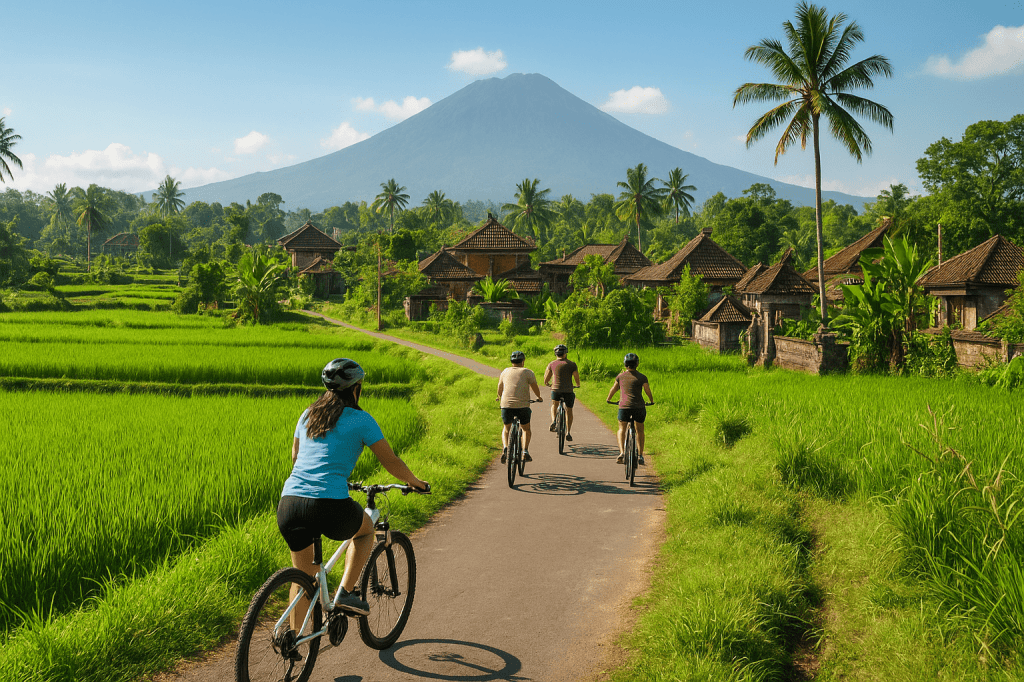
When I first signed up for a Bali cycling tour through villages, I thought it would be just a bit of exercise and some nice views of rice paddies. Turns out, it was so much more—it became one of those experiences that sticks with you long after the trip is over. This kind of tour isn’t just about pedaling a bike; it’s about meeting real Balinese families, cruising past centuries-old temples, learning about rice farming the way locals actually do it, and getting an authentic taste of island life that no luxury resort can replicate.
It’s funny because most people only know Bali for its beaches, infinity pools, and yoga retreats, but once you get on a bike and ride through its villages, the island shows you a whole new side. And trust me, it’s the side that makes you fall in love with the culture, not just the scenery.
Why Choose a Bali Cycling Tour Through Villages Instead of Just Sightseeing?
Okay, let’s be real for a second. You can sit in a van with air conditioning, snap pictures through the window, and check off the “cultural tour” box. But when you’re on two wheels? Everything changes. You feel the warm breeze, smell the incense from temple offerings, and hear roosters crowing in the background while kids wave at you like you’re some kind of celebrity.
Cycling through Bali’s villages is slower-paced, so you actually have time to see things properly. You notice little shrines in front of homes, women carrying baskets of fruit on their heads, and farmers knee-deep in the rice paddies doing backbreaking work that’s been part of Bali’s heartbeat for centuries.
Plus, you’re not stuck in traffic. And believe me, if you’ve ever been on a Bali road trip during peak hours, you know what a blessing that is.
Another perk? The tours usually come with guides who grew up in those same villages. That means they don’t just point out “this is a temple” but instead tell you how their family actually worships there, or share childhood stories about swimming in the river you’re pedaling past. That kind of connection doesn’t happen when you’re just hopping between tourist attractions.
The Start of the Journey – Mountain Drop-Off
Most tours kick off in the cooler mountain areas, often near Kintamani, where you get insane views of Mount Batur. Starting high up means most of the ride is downhill, which, let’s be honest, is the best kind of cycling. You barely break a sweat, but you still look athletic in the photos (win-win).
You usually get a basic mountain bike, helmet, and a bottle of water before you’re off. Don’t worry about the gear—tour operators keep it simple. The bikes aren’t Tour de France quality, but they’re comfortable enough for cruising through uneven village paths.
Cruising Through Rice Terraces
Here’s where things get jaw-dropping. Cycling past Tegallalang or Jatiluwih rice terraces feels like pedaling through a postcard. The green fields look unreal, and depending on the season, you’ll either see tiny seedlings being planted or golden stalks ready for harvest.
According to the Food and Agriculture Organization (FAO), Bali’s subak system—its traditional irrigation network—has been recognized as a UNESCO cultural heritage because it reflects not just farming techniques but also deep spiritual and community values. Seeing it up close while on a bike makes you appreciate that this isn’t just scenery; it’s a living, working system tied to religion and daily survival.
Village Life Encounters
This is the highlight for most people. On my ride, we stopped at a small family compound where the grandmother was weaving baskets from palm leaves while her grandson chased a kite. The guide explained how each family compound is structured around a temple, and suddenly you realize every home is its own spiritual hub.
Don’t be surprised if you’re offered coffee or fresh fruit during these visits. Balinese hospitality is next level, and it’s often included as part of the tour experience. And yes, the coffee is strong—good luck sleeping later if you drink it after 3 PM.
Hidden Temples and Local Ceremonies
You might pass ceremonies in progress, with villagers dressed in sarongs and headscarves, carrying offerings of flowers and rice. It feels almost intrusive to watch, but guides usually reassure you that it’s okay to observe respectfully. Sometimes, if you’re lucky, you’re even invited to join in a small blessing ritual.
And even if you don’t stumble upon a ceremony, the temples themselves are stunning. Unlike the big touristy temples like Tanah Lot, the village shrines are smaller, quieter, and much more personal.
Lunch With a View
Most tours end with lunch, often overlooking rice terraces or in a garden café. It’s usually a spread of nasi goreng, satay, fresh fruit, and coconut water. After a few hours of pedaling (or mostly coasting downhill), trust me, that meal tastes better than anything you’ll eat at a 5-star resort.
Practical Things to Know Before Booking a Bali Cycling Tour Through Villages
How Long Does It Take?
Expect the tour to last about 3–5 hours, including stops. The actual cycling distance is usually between 15–25 kilometers, but since it’s mostly downhill, it feels easy. Even if you’re not in great shape, you’ll be fine.
How Much Does It Cost?
Prices vary depending on the operator and inclusions, but generally, you’re looking at around $30–$50 USD per person. Some premium tours go higher if they include hotel pick-up, extra meals, or smaller private groups.
When you compare that to other excursions in Bali—like a day trip to Nusa Penida or a white-water rafting adventure—it’s actually one of the most affordable activities for the amount of cultural immersion you get.
Who Can Join?
Most tours welcome kids, though you’ll want to check minimum age requirements. Families often rave about this activity because it gives kids something more interactive than just temple-hopping. Seniors can join too, as long as they’re comfortable on a bike. I rode with a couple in their late 60s who kept up just fine.
What to Bring With You
Pack light but smart:
- Sunscreen (the tropical sun doesn’t play around).
- A light rain jacket if you’re going in the wet season.
- Comfortable sneakers (flip-flops are a bad idea on pedals).
- A little cash for snacks or tips.
Some operators provide ponchos and extra water, but better safe than sorry.
Benefits Beyond the Bike Ride
Here’s the thing most people don’t realize until afterward: a cycling tour through villages gives you stories you’ll actually want to tell when you get home. Everyone’s seen the famous Bali beach sunsets on Instagram, but not everyone has shared a laugh with a farmer while his cow blocks the road, or joined kids in shouting “hello mister!” as you pass their school.
There’s also the sustainability angle. You’re supporting local businesses, small tour operators, and families who host you along the way. Compared to ATV rides or big tour buses, this leaves a lighter footprint and channels money directly into the communities you’re visiting.
And honestly? It feels good to leave Bali knowing you connected with its people, not just its tourist attractions.
Is It Worth It? Comparing Bali Cycling Tours to Other Popular Activities
This is where most travelers hesitate—they want to do “the big stuff”: surfing in Canggu, hiking Mount Batur, snorkeling in Amed. And don’t get me wrong, those are awesome. But when you compare them, the cycling tour has something unique.
Surfing gives you adrenaline, sure. Hiking Mount Batur at sunrise gives you bragging rights. But cycling through villages gives you connection. It’s slower, calmer, and honestly more meaningful. It’s also less crowded—no hundreds of people jostling for the same Instagram photo.
For travelers who want to balance out their Bali itinerary with both adventure and culture, this is the sweet spot.
Booking Your Bali Cycling Tour Through Villages
The beauty of a Bali cycling tour through villages is that it’s not a one-size-fits-all deal. You can find versions that are super family-friendly, or others that focus more on photography stops, or even private tours if you want something more intimate.
My advice? Go for one led by locals, not just generic big companies. Ask if the guides grew up in the villages you’ll be visiting. That personal connection makes a huge difference in the stories you’ll hear.
And one last thing—don’t stress about whether you’re fit enough. These rides are designed for everyday travelers, not professional cyclists. If you can ride a bike around your neighborhood, you’ll do just fine in Bali.
What Makes a Bali Cycling Tour Through Villages Different From Just Renting a Bike
You might be thinking, “Why not just rent a bike and go exploring myself?” Fair question—I had the same thought once. The truth is, you can rent a bike in Bali, and in the touristy areas like Ubud, you’ll see plenty of travelers pedaling around on their own. But a Bali cycling tour through villages isn’t just about getting from point A to point B. It’s curated in a way that ensures you don’t just ride aimlessly, but actually experience things that matter.
For starters, navigation in rural Bali isn’t always straightforward. Villages are a web of narrow lanes, dirt paths, and rice paddy tracks that often don’t show up properly on Google Maps. I’ve personally gotten lost trying to explore on my own—and while that can sometimes be fun, it also means you miss the really interesting stuff. A guided cycling tour takes you through routes that balance beauty, safety, and cultural stops.
Then there’s the insider access. I remember one guide taking us to his cousin’s family compound, where we learned how they make canang sari, those little daily flower offerings you see everywhere in Bali. There’s no way I would’ve stumbled into that on my own. Without a local connection, you’d probably just ride past, not realizing you’re missing the chance to peek into an everyday tradition.
And safety’s another factor. Traffic in Bali can be unpredictable—even in villages, scooters zip by, and dogs sometimes chase bikes. Having guides who know the safest, least hectic routes makes the whole experience more relaxed.
Seasonal Considerations for a Bali Cycling Tour Through Villages
Bali doesn’t have spring, summer, fall, winter—it has dry season and rainy season. And the difference between them can really change your cycling experience.
If you’re planning between April and October, you’re in luck. That’s dry season, and the weather is warm but manageable. The rice terraces are usually at their greenest in the middle months (around June and July), which makes for the most photogenic rides.
From November to March, you’re in wet season. Now, don’t get me wrong, you can still do the tours—many operators run them year-round—but expect some showers. Sometimes it’s a quick downpour that clears in 20 minutes, sometimes it sticks around for hours. Personally, I loved doing a ride in January when the rain cooled everything down, but you need a good rain jacket and some tolerance for mud.
One bonus of riding in the rainy season? Fewer tourists. You’ll often have quieter roads and a more private feel to the whole thing.
Read also: Budget-Friendly Bali Vacation Deals in Ubud
Choosing the Right Bali Cycling Tour Through Villages
With dozens of companies offering these tours, picking one can feel like scrolling through endless Netflix options—you just want someone to tell you which one’s good. While I can’t name-drop specific brands here, I can tell you what to look for:
- Local guides, not just expats. A tour run by Balinese people gives you the most authentic stories and interactions.
- Group size. Smaller groups (6–10 people) are way better than being herded in a pack of 30.
- Reviews mentioning cultural stops. The best tours weave in temple visits, family compound stops, and chances to interact with locals.
- Clear inclusions. Check if lunch, transport, and insurance are included.
It’s worth spending an extra $10–$15 for a quality tour because those little touches—like having a knowledgeable guide or stopping for fresh coconut water in a tiny warung—make all the difference.
Why Families and Solo Travelers Love These Tours
If you’re traveling with kids, a cycling tour can be a lifesaver. Kids get restless with long car rides, but on a bike, they’re entertained and engaged. Many tours even offer tandem bikes or child seats. And the guides are usually fantastic with kids—teaching them a few Balinese words, pointing out farm animals, or letting them try fresh sugarcane juice.
For solo travelers, it’s a built-in way to meet people. I joined a ride once where our group ended up going for beers in Ubud after the tour because we all clicked. It’s easier to bond over shared experiences, and cycling through rice fields together gives you that common ground.
 Bali Tourism